
Why You’ll Love No-Knead Turkish Bread Recipe
First, there’s no kneading involved, which makes it perfect for beginners and busy home bakers. The dough comes together quickly and relies on time rather than effort to develop structure.
Second, the texture is irresistible. The inside stays fluffy and tender, while the high initial baking temperature creates a golden, slightly crisp crust.
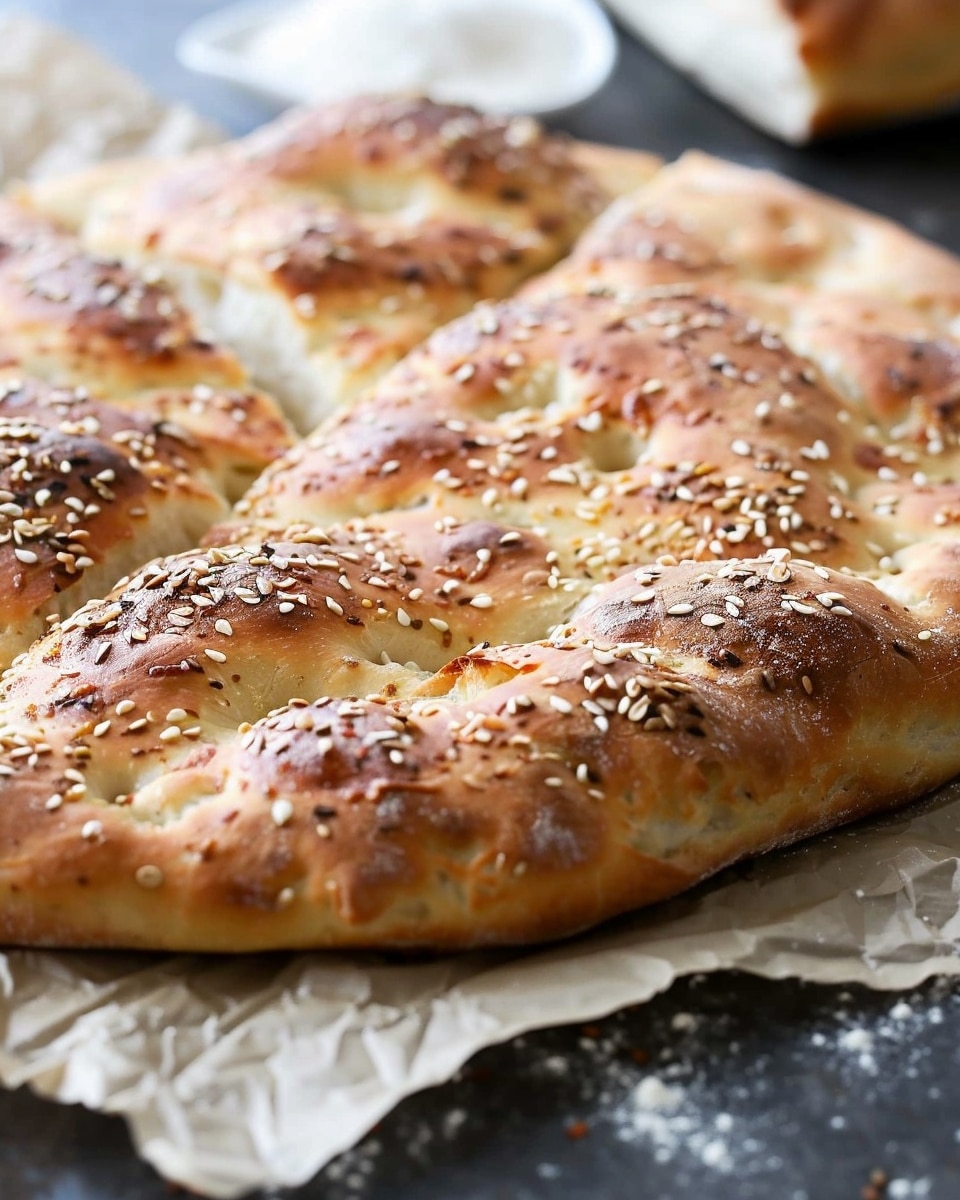
You’ll also love the traditional patterned top. The signature circular and criss-cross design not only looks impressive but also helps the bread bake evenly.
Finally, this bread is incredibly versatile. Serve it alongside soups, dips, grilled meats, or simply tear off a warm piece and enjoy it with butter or olive oil.
Ingredients
(Tip: You'll find the full list of ingredients and measurements in the recipe card below.)
250 g / 2 cups bread flour
7 g / 0.25 oz / 2¼ teaspoon instant dried yeast
200 ml / ¾ cup + 4 teaspoon warm water
2 teaspoon caster/fine sugar
1 teaspoon fine salt
15 ml / 1 tablespoon olive oil, for glazing
handful of white and black sesame seeds
Directions
-
Mix the flour, sugar, and salt in a large mixing bowl.
-
Create a small well in the middle of the flour and add the yeast. Pour the warm water into the well and mix everything together with your hands until combined. The dough will be very wet and somewhat sticky.
-
Cover the bowl with cling film and leave it to prove for about 1 hour, or until the dough has doubled in size.
-
Generously flour your work surface and tip the risen dough onto it. Add more flour as needed to prevent sticking. Gently shape the dough into a flat circle about 2–3 cm high.
-
Place the dough onto an olive oil-greased baking tray. Cover with a tea towel and let it prove again for 45 minutes. During the last 20 minutes, preheat your oven to 250°C / 480°F.
-
Dent the top of the dough by drawing a rough inner circle about 3 cm from the edge using your fingertips. Then create criss-crossed diagonal lines inside the circle, spacing them about 2–3 cm apart.
-
Brush the top generously with olive oil. Sprinkle with white and black sesame seeds, pressing them gently into the dough so they stick.
-
Bake for 8 minutes at 250°C / 480°F. Then reduce the oven temperature to 200°C / 390°F and bake for another 5 minutes, or until the bread is golden brown.
Allow the bread to cool slightly before slicing or tearing.
Servings and timing
Servings: 1 loaf (approximately 6–8 servings)
Preparation time: 15 minutes
First proof: 1 hour
Second proof: 45 minutes
Baking time: 13 minutes
Total time: About 2 hours 15 minutes
Variations
You can sprinkle nigella seeds along with the sesame seeds for extra flavor and a more traditional touch.
For a softer crust, brush the bread with a little water before baking instead of olive oil.
Add dried herbs such as thyme or oregano to the dough for a fragrant twist.
If you prefer whole grain flavor, substitute up to half of the bread flour with whole wheat flour. Keep in mind that the texture may be slightly denser.
For a richer finish, mix a small amount of yogurt with olive oil for brushing before baking.
Storage/Reheating
Store the bread at room temperature in an airtight container or wrapped tightly in a clean kitchen towel for up to 2 days.
To freeze, wrap the completely cooled bread tightly in plastic wrap and place it in a freezer-safe bag. Freeze for up to 2 months.
To reheat, warm the bread in a preheated oven at 180°C / 350°F for 5–7 minutes. If frozen, allow it to thaw at room temperature before reheating. Avoid microwaving if possible, as it can make the bread chewy.
FAQs
Can I use all-purpose flour instead of bread flour?
Yes, you can substitute all-purpose flour. The texture may be slightly less chewy, but the bread will still turn out delicious.
Why is my dough so sticky?
This is a high-hydration dough, which means it contains a good amount of water. The stickiness is normal and helps create a soft interior.
Can I reduce the proofing time?
Proofing time is important for flavor and texture. Reducing it may result in a denser loaf. If your kitchen is warm, the dough may rise slightly faster.
How do I know when the bread is fully baked?
The bread should be golden brown on top and sound hollow when tapped on the bottom.
Can I make this bread without sesame seeds?
Yes, the seeds are optional. You can leave them out or replace them with other toppings.
What is the purpose of the patterned top?
The pattern helps control how the bread expands in the oven and gives it its traditional appearance.
Can I make the dough ahead of time?
Yes, after mixing, you can refrigerate the dough for the first rise. Allow it to come to room temperature before shaping.
Why do I bake it at a high temperature first?
The initial high heat helps the bread puff up quickly and develop a beautiful crust.
Can I double the recipe?
Yes, simply double all ingredients and shape into two loaves. Make sure not to overcrowd the baking tray.
Is this bread suitable for sandwiches?
Absolutely. Slice it horizontally or cut into wedges for sandwiches, wraps, or dipping.
Conclusion
This no-knead Turkish bread is proof that simple ingredients and minimal effort can produce bakery-quality results at home. With its soft crumb, golden crust, and classic sesame topping, it’s a versatile and satisfying bread you’ll want to bake again and again. Whether served fresh from the oven or reheated the next day, it never fails to impress.
No-Knead Turkish Bread
5 Stars 4 Stars 3 Stars 2 Stars 1 Star
No reviews
This no-knead Turkish bread is soft and fluffy on the inside with a lightly crisp, golden crust. Topped with olive oil and sesame seeds, it features a traditional patterned design and requires minimal effort for bakery-style results at home.
- Author: Janet
- Prep Time: 15 minutes
- Cook Time: 13 minutes
- Total Time: 2 hours 15 minutes
- Yield: 1 loaf (6–8 servings)
- Category: Bread
- Method: Baking
- Cuisine: Turkish
- Diet: Vegan
Ingredients
250 g (2 cups) bread flour
7 g (2¼ tsp) instant dried yeast
200 ml (¾ cup + 4 tsp) warm water
2 tsp caster/fine sugar
1 tsp fine salt
1 tbsp (15 ml) olive oil (for glazing)
Handful of white sesame seeds
Handful of black sesame seeds
Instructions
- In a large mixing bowl, combine the flour, sugar, and salt.
- Create a well in the center and add the yeast. Pour in the warm water and mix until a wet, sticky dough forms.
- Cover the bowl with cling film and let the dough rise for about 1 hour, or until doubled in size.
- Generously flour a work surface and transfer the dough onto it. Shape gently into a flat circle about 2–3 cm thick.
- Place the dough on an olive oil-greased baking tray. Cover with a tea towel and let rise for 45 minutes. Preheat the oven to 250°C (480°F) during the last 20 minutes.
- Using your fingertips, create a circular indent about 3 cm from the edge. Add criss-cross diagonal lines inside the circle.
- Brush the top with olive oil and sprinkle with sesame seeds, pressing them gently into the dough.
- Bake at 250°C (480°F) for 8 minutes. Reduce the temperature to 200°C (390°F) and bake for another 5 minutes, or until golden brown.
- Allow to cool slightly before slicing or tearing and serving.
Notes
You can add nigella seeds for a more traditional flavor.
For a softer crust, brush with water instead of olive oil before baking.
Substitute up to 50% of the bread flour with whole wheat flour for a nuttier taste.
Store at room temperature for up to 2 days in an airtight container.
Freeze for up to 2 months and reheat in the oven at 180°C (350°F) for 5–7 minutes.
Nutrition
- Serving Size: 1 slice (⅛ loaf)
- Calories: 129 kcal
- Sugar: 1 g
- Sodium: 288 mg
- Fat: 1.8 g
- Saturated Fat: 0.3 g
- Unsaturated Fat: 1.5 g
- Trans Fat: 0 g
- Carbohydrates: 24 g
- Fiber: 1 g
- Protein: 3 g
- Cholesterol: 0 mg


Leave a Reply